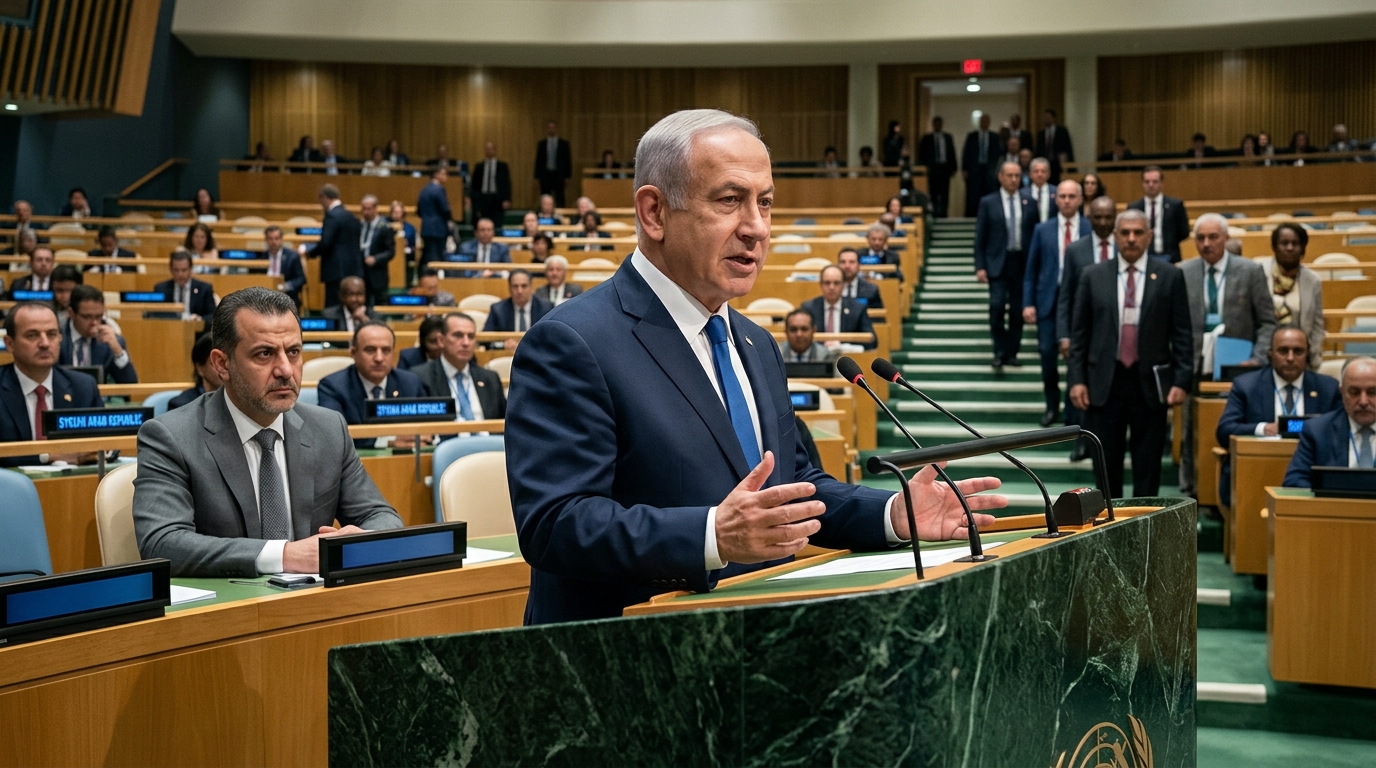
Al-Sharaa and Netanyahu at the UN: What Did They Say About Syria and the Golan Heights?
The United Nations General Assembly in New York became the stage for a major exchange of positions over Syria, Israel and the Golan Heights after Syrian President Ahmed al-Sharaa addressed the assembly, followed the next day by Israeli Prime Minister Benjamin Netanyahu.
The Golan Heights and Israel's military presence in Syrian territory were central to al-Sharaa's remarks. He said the Golan would remain Syrian territory and called for Israel to withdraw and return to the arrangements established under the 1974 disengagement agreement.
A day later, Netanyahu responded to al-Sharaa's position during his own UN speech, rejecting the Syrian president's claim over the Golan and referring to the historical Jewish presence in the area.
What Did Ahmed al-Sharaa Say at the United Nations?
During his address to the 81st session of the UN General Assembly, Syrian President Ahmed al-Sharaa focused on Syria's transition from years of war toward reconstruction and recovery.
Israel and the Golan Heights, however, were among the most significant issues in his speech.
Al-Sharaa accused Israel of carrying out hundreds of airstrikes and more than 1,200 incursions into Syria, according to figures he cited, and called for an Israeli withdrawal from Syrian territory.
He also reaffirmed that the Golan Heights will remain Syrian territory and called for a return to the 1974 disengagement arrangements.
How Did Netanyahu Respond?
Benjamin Netanyahu addressed the UN General Assembly the following day and discussed a range of regional and international issues, including Syria and the Golan Heights.
Responding to al-Sharaa's position, Netanyahu rejected the Syrian claim that the Golan would remain Syrian territory and referred to what he described as the area's historical Jewish connection.
The exchange made the Golan Heights the clearest point of disagreement between the two speeches.
Delegates Walked Out During Netanyahu's Speech
The political message was not the only moment that attracted international attention.
As Netanyahu began his speech, delegations from several countries walked out of the UN General Assembly hall.
Video from inside the chamber showed numerous delegates leaving their seats, while others remained. Some attendees also shouted and booed during the speech, according to multiple reports.
Netanyahu responded to the departures at the beginning of his remarks as tensions continued inside the chamber.
Why Was Al-Sharaa's UN Speech Important?
Al-Sharaa's address came as Syria seeks to rebuild its international relationships following years of war.
His comments on the Golan Heights, Israel and the 1974 agreement therefore carried significance beyond the territorial dispute itself.
The issue is particularly sensitive because of Syria's geographic proximity to Israel and continued tensions around the demilitarized area.
The Golan Heights Remains at the Center of the Dispute
The Golan Heights remains one of the most sensitive issues in Syrian-Israeli relations.
Israel has controlled most of the territory since 1967 and annexed it in 1981. UN Security Council Resolution 497 declared the Israeli annexation decision "null and void" under international law.
Al-Sharaa reiterated Syria's position during his UN address, while Netanyahu presented a different historical and political argument regarding the territory.
What Do the Messages From the UN Mean?
The speeches highlighted the continuing disagreement between Damascus and Tel Aviv over the Golan Heights, borders, security arrangements and Israeli military activity in Syrian territory.
The fact that these issues were raised at the UN General Assembly gives the dispute additional international visibility.
The two leaders did not face each other in a direct debate inside the chamber. Al-Sharaa delivered his address on September 23, while Netanyahu spoke on September 24. Netanyahu's speech, however, directly addressed al-Sharaa's position on the Golan.
What Happens Next?
The security relationship between Syria and Israel remains one of the most closely watched issues in the region.
Al-Sharaa has called for a return to the 1974 arrangements and an Israeli withdrawal from Syrian territory, while Israeli officials continue to emphasize security considerations and their position regarding the Golan.
Any new diplomatic or military developments could therefore attract significant regional and international attention.
The UN Revealed the Divide — But Did Not Resolve It
The 81st UN General Assembly made clear that the dispute over Syria and the Golan Heights remains unresolved.
Al-Sharaa used the international platform to reaffirm Syria's claim to the Golan and call for an Israeli withdrawal. Netanyahu used his speech to reject that position and present Israel's case.
The speeches did not produce an immediate resolution, but they clearly exposed the positions that could shape future diplomatic discussions.
Key Takeaway
The Golan Heights and Syria emerged as major points of disagreement between Ahmed al-Sharaa and Benjamin Netanyahu at the United Nations.
Al-Sharaa insisted that the Golan remains Syrian territory and called for an Israeli withdrawal and a return to the 1974 arrangements. Netanyahu rejected that position and emphasized Israel's historical claims.
Meanwhile, the walkout by multiple delegations as Netanyahu began speaking became one of the most widely reported moments of the UN session.
Last updated: September 25, 2026