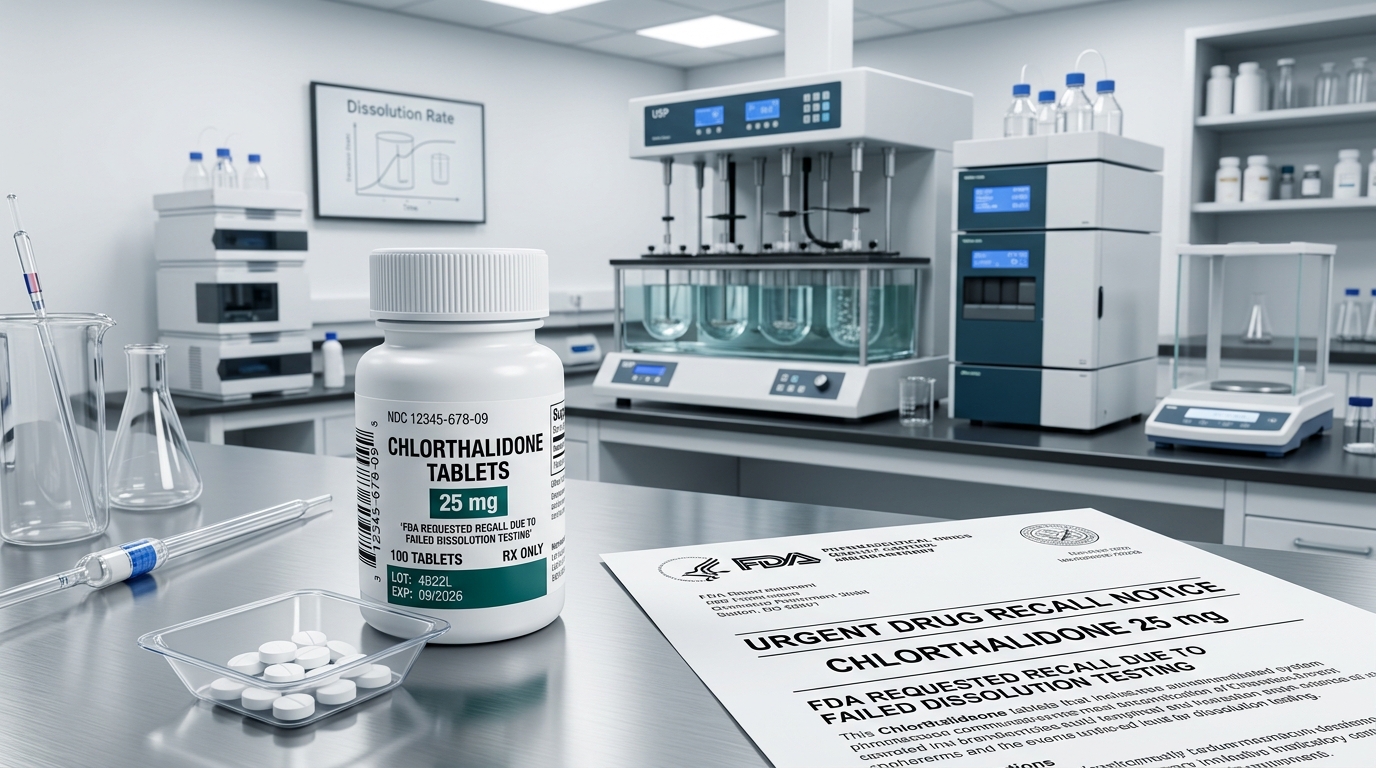
FDA Chlorthalidone Recall: Blood Pressure Drug Recalled After Failed Dissolution Testing
The U.S. Food and Drug Administration FDA has classified a nationwide recall involving a specific lot of Chlorthalidone 25 mg tablets, a prescription medication used to treat high blood pressure and fluid retention.
The recall was initiated after the product failed to meet dissolution specifications, a quality test used to assess how the active ingredient is released from a tablet.
The recall involves approximately 13,567 bottles of Chlorthalidone tablets. The FDA classified the recall as Class II on September 17, 2026.
What Is Chlorthalidone?
Chlorthalidone is a diuretic medication commonly used to treat hypertension, or high blood pressure. It can also be used to help reduce fluid retention.
The medication works by helping the kidneys remove more water and salt from the body, which can help lower blood pressure and reduce excess fluid.
DailyMed identifies the affected product as Chlorthalidone 25 mg manufactured by Inventia Healthcare Limited and distributed by Rising Pharma Holdings.
Why Was Chlorthalidone Recalled?
The reason for the recall is failure to meet dissolution specifications.
Dissolution testing is a laboratory quality test that measures how an active pharmaceutical ingredient is released from a tablet into a testing medium.
The FDA maintains a dissolution methods database and explains that dissolution testing is used to evaluate the release of active ingredients from drug products, which is important for drug availability for absorption.
For the recalled Chlorthalidone lot, the product failed to meet the required dissolution specifications, leading to the recall.
Which Chlorthalidone Lot Is Recalled?
The current recall does not involve all Chlorthalidone medications.
The recalled product information is:
Drug: Chlorthalidone Tablets USP 25 mg
Package: 100 tablets per bottle
NDC: 64980-599-01
Batch number: RISA24002
Expiration date: April 2027
Manufacturer: Inventia Healthcare Limited
Distributor: Rising Pharma Holdings Inc.
Quantity: 13,567 bottles
The recalled product was distributed nationwide in the United States.
What Does an FDA Class II Recall Mean?
The FDA classified this Chlorthalidone recall as Class II.
According to the FDA, a Class II recall means that use of or exposure to the recalled product may cause temporary health consequences or medically reversible adverse effects, or that the probability of serious adverse health consequences is considered remote.
Class II is different from Class I, the FDA's most serious recall classification.
The FDA also advises that patients generally should not stop a recalled Class II medication on their own unless instructed to do so. In some situations, abruptly stopping a medication can create its own health risks. Patients with questions should contact their doctor or pharmacist.
Does the Recall Affect All Chlorthalidone?
No.
The current FDA Chlorthalidone recall applies to a specific lot, RISA24002.
Simply having a bottle labeled Chlorthalidone does not mean that the medication is part of this recall.
Patients should check the NDC number, batch or lot number and expiration date on their medication label.
Was Chlorthalidone Recalled Earlier This Year?
Yes.
The current recall follows another Chlorthalidone recall involving the same manufacturer in June 2026.
That earlier recall involved approximately 11,460 bottles and was also related to dissolution specifications.
In the earlier recall, long-term stability testing showed a mean dissolution result of 78%, compared with an acceptance criterion of not less than 80% of the labeled amount of Chlorthalidone.
What Should Patients Taking Chlorthalidone Do?
If you take Chlorthalidone, do not assume that your medication is recalled simply because it contains the same drug.
Check the NDC number, lot or batch number and expiration date on the bottle.
If the information matches the recalled product, contact your pharmacist, doctor or healthcare provider for instructions about obtaining a replacement.
Patients should not stop blood pressure medication on their own without medical advice. The FDA notes that stopping some medications may be more harmful than continuing them until appropriate medical guidance is obtained.
Have Any Illnesses Been Reported?
Current reports about the recall indicate that no illnesses have been reported in connection with the affected lot.
The recall is based on the product's failure to meet dissolution specifications, making it a product-quality issue rather than an announcement that all Chlorthalidone medications are unsafe.
Why Is the FDA Chlorthalidone Recall Trending?
The Chlorthalidone recall has attracted renewed attention after the FDA classified the nationwide recall as Class II.
Interest has also increased because the same manufacturer was involved in another Chlorthalidone recall earlier in 2026 involving a similar dissolution issue.
The story also contains several high-interest search terms, including FDA Chlorthalidone Recall, Chlorthalidone Recall, Dissolution Testing, Blood Pressure Medication Recall and FDA Drug Recall.
Bottom Line
The current Chlorthalidone recall involves a specific lot of Chlorthalidone 25 mg tablets, batch RISA24002, with approximately 13,567 bottles affected in the United States.
The recall was initiated after the lot failed to meet dissolution specifications and was classified by the FDA as Class II.
The recall does not apply to every Chlorthalidone product. Patients should check the information on their medication label and contact their pharmacist or healthcare provider if their product matches the recalled lot.