
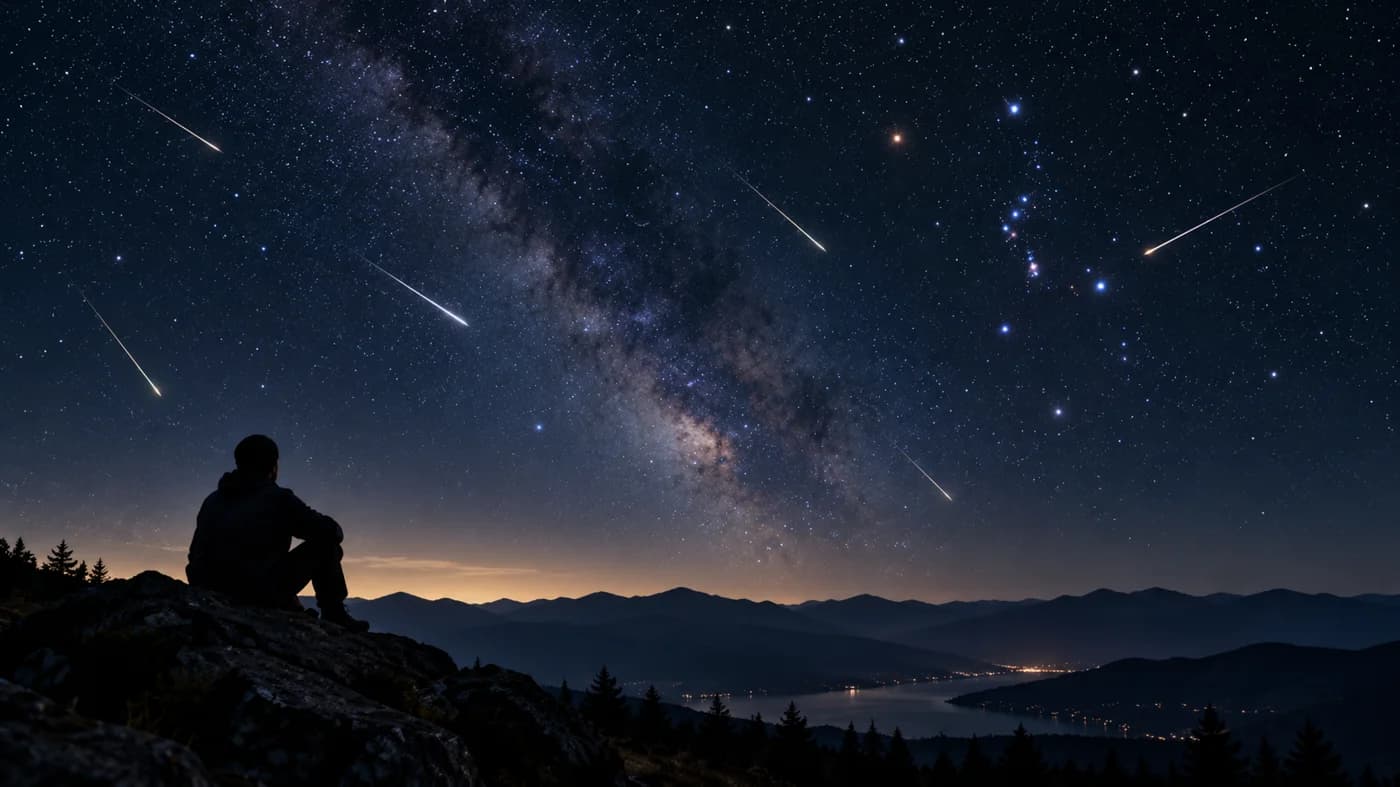
The Orionid meteor shower is one of October’s upcoming skywatching events. NASA’s 2026 guide places its peak on the night of October 21 into October 22. The useful question is not simply which date to mark, but whether darkness and local conditions will allow the fainter streaks to be seen.
Why does the Moon matter this year?
NASA says a bright waxing gibbous Moon may reduce visibility. The agency suggests the hours before dawn after moonset as a better opportunity. The meteors come from debris left by Halley’s Comet; they appear to radiate near Orion but can cross different parts of the sky.
What should you expect?
NASA’s general Orionid page describes roughly 10–20 meteors per hour under dark skies. Its October blog gives a lower estimate for suburban conditions. These are context-dependent descriptions, not a guaranteed count for a particular observer. A bright illustration of meteors should never be mistaken for a forecast of a storm.
Plan the viewing conditions, not just the date
Our practical reading is to keep three questions separate: when the shower peaks, when your local Moon sets, and whether the sky is clear. A calendar answers the first but cannot answer the other two for every location. Choose an accessible dark place, check local weather closer to the night and allow time for your eyes to adjust, as NASA recommends. You do not need to predict a spectacular photograph for the outing to be worthwhile; a patient look at the real sky is the point.
Sources
Cover image: AI-generated illustration, not a documentary photograph.