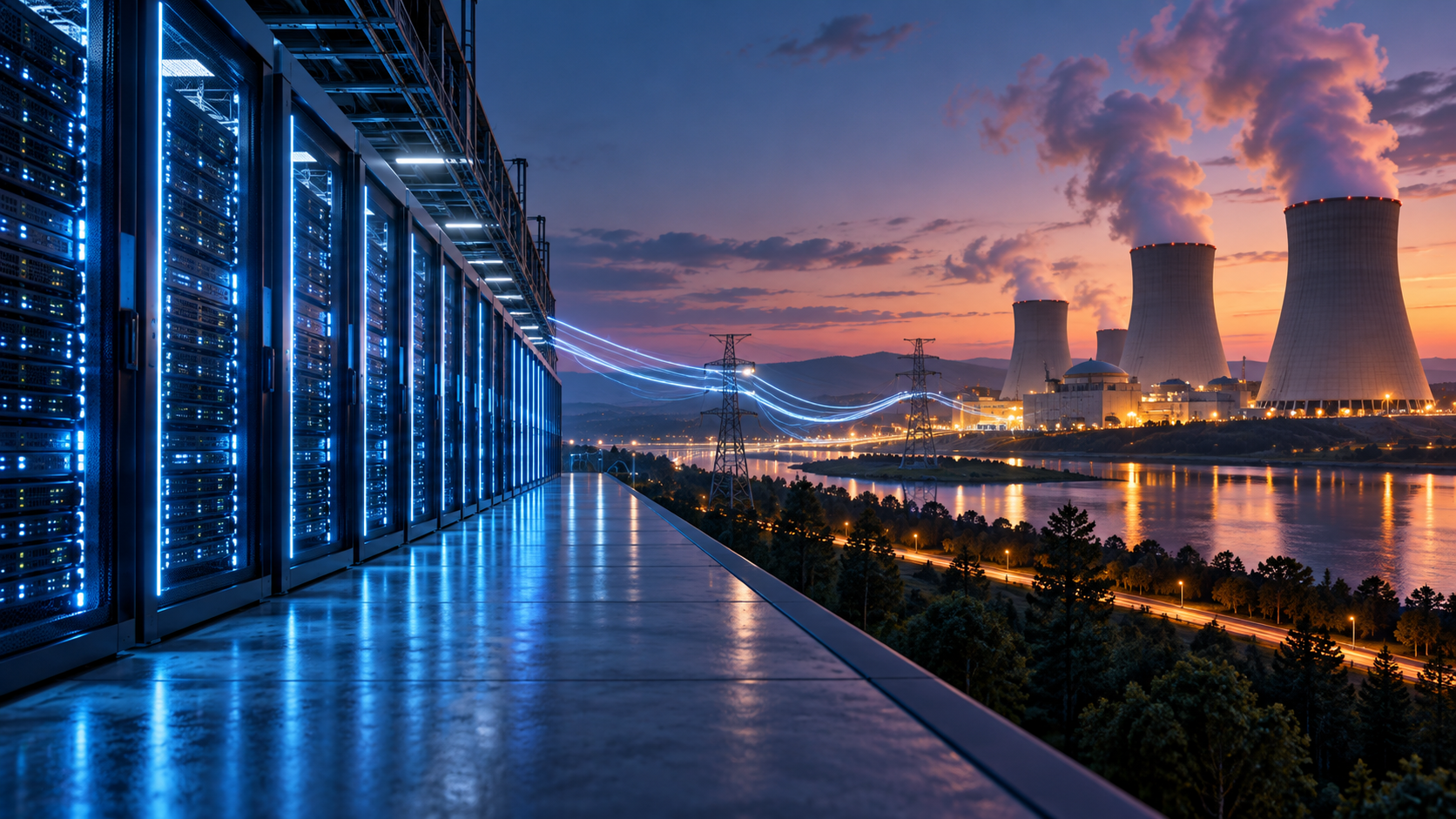
The expansion of AI is becoming an electricity story as well as a technology story. Google and Constellation announced an agreement on October 6, 2026 to support 890 megawatts of additional nuclear generating capacity through upgrades to existing US reactors.
The plan adds output at plants already operating, rather than announcing a newly built nuclear station. It connects the growth of data centres with the challenge of increasing reliable electricity supply.
What does the agreement include?
The companies’ joint announcement describes a 20-year nuclear power purchase agreement. Constellation plans more than $4.3 billion of investment in upgrades across 11 nuclear units in Illinois, Pennsylvania and New Jersey.
A separate 15-year arrangement covers another 2,700 MW of electricity. As Reuters reports, that additional supply is not tied to one specific generation source. The two components should not be described as 3,590 MW of new nuclear power.
How can an existing reactor produce more?
In its explanation of the agreement, Google describes upgrades to turbines, steam generators and digital controls. Improving equipment can increase output without constructing a whole new plant.
The long-term purchase commitment provides a customer for that extra capacity, supporting the economics of investment. These are planned increases, not electricity that has all become available today.
Why is this linked to artificial intelligence?
AI services depend on data centres containing computing equipment that needs electricity and cooling. More digital infrastructure therefore requires planning for energy as well as chips and buildings.
Nuclear generation offers steady output with low operational carbon emissions. That makes it attractive to companies seeking dependable power alongside clean-energy goals. The deal illustrates how competition in technology increasingly reaches into physical infrastructure.
Does the deal guarantee cheaper bills?
Google says the arrangement is intended to add supply without shifting the associated upgrade costs to other grid customers. That is the company’s stated approach, not a guarantee that every household’s bill will fall. Electricity prices depend on other market and regulatory factors too.
What happens next?
The companies expect the first capacity increase in 2028. Delivery, project approvals and completed upgrades will determine how the plan translates into actual generation.
For readers, the central point is clear: the next phase of AI growth needs power infrastructure, and Google is backing more output from existing nuclear plants as part of that effort.
Published October 7, 2026. Featured image is an AI-generated conceptual illustration, not a photograph of the plants covered by the agreement.